Skip to content
outpace.
Video · Deciding what to build

The Job Market Split Nobody's Talking About (It's Already Started)

Nate B Jones on the work that gets valuable when producing gets cheap: saying precisely what should exist, and judging whether what came back is right.

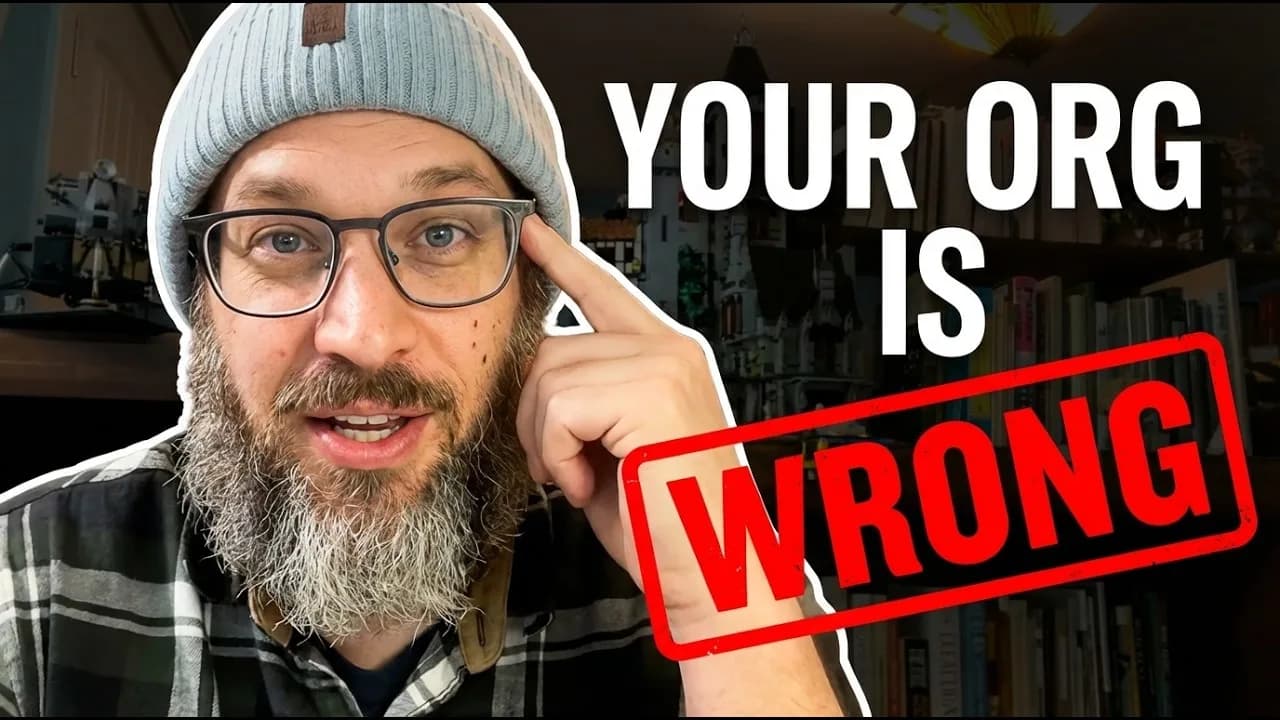
Nate B Jones pointing at his temple beside the words "your org is" and a red stamp reading "wrong"Watch on YouTube ↗ (opens in a new tab)

Nate B Jones argues that as producing software gets cheap, the value moves to saying clearly what should exist. He cites a review of 470 pull requests where AI-written code carried 1.7 times more logic errors, Google's DORA finding of more bugs and longer reviews as AI use climbed, and AWS shipping a tool that makes developers write a testable specification before any code. He expects the same shift across analysis, consulting and project management.

The failure he's worried about isn't the agent that ignores you. It's the one that builds exactly what you asked for, and what you asked for was wrong. That risk doesn't sit with engineers. It sits with whoever decided what to ask for.

His other point lands closer to home for most organisations. The work that goes first is coordination: the status decks, the translating between teams, the meeting that exists so two groups stay in step. That work was never the value. It was the price of being big. We've written about that before.

So here's a test you can run today. Take the last thing you asked someone, or something, to build. Could a person who wasn't in the room tell from what you wrote what it's for, who it helps, and how you'd know it worked? Settling that before anything gets built is the Product Bench, and we publish the answer with the work.

He's clear that this is a skill, not a personality. It can be taught.

Highlights

  • The expensive failure is not the agent that ignores instructions. It's the agent that builds exactly what you asked for, when what you asked for was wrong.
  • Coordination work goes first: the reports and the alignment exist because the organisation is big, and leaner organisations don't need them.
  • Ask whether your role would exist if the company were a quarter of the size. If the answer is no, move towards work that creates value directly.

From the transcript

The person who can take a vague business need and translate it into a spec is the new center of gravity in the organization. Doesn't matter what their title is.

Work designStrategy

Continue reading

All articles →
Illustration of a lone figure in silhouette against an orange sky, facing a vast bank of white and slate-grey cloud.

The Comfortable Fog

In most organisations, coordination stands in for progress. Why comfort beats clarity, and what changes when AI moves the bottleneck.

Illustration of laboratory glassware in orange and blue, with a gloved hand adjusting a flask on a bench.

Stop Planning, Start Probing

A tidy change roadmap feels like control, but complex work doesn't follow it. Small probes teach you more, faster, with less collateral damage.

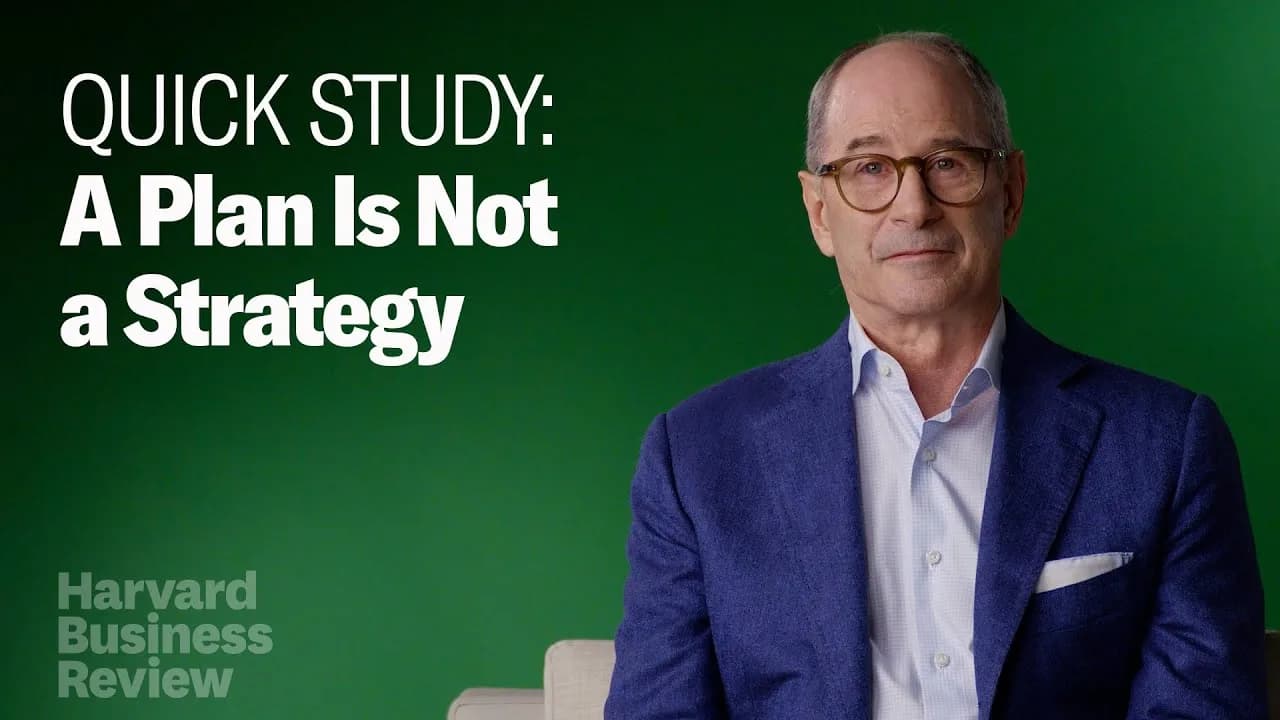
Roger Martin in a blue jacket against a green background, with the title "Quick Study: A Plan Is Not a Strategy" and the Harvard Business Review wordmark.9:32

A Plan Is Not a Strategy

Roger Martin on why a list of planned activities isn't a strategy, and why the comfort of planning is exactly the problem.